Kamloops, British Columbia — Police in Washington state (USA) have closed a cold case killing dating back to 1986 after linking a B.C. man to the crime using DNA evidence.
The Wenatchee Police Department said it is believed that Henry Leland killed Carol Traicoff, 35, on or around May 14, 1986.
Leland was well-known in Kamloops, as he spent several years living on the city's streets before his death in 2007.
In a news release, Wenatchee police said their department responded to a report of a deceased person, who was identified as Traicoff. They determined her death a "homicidal assault."
Carol Traicoff was found dead in downtown Wenatchee, WA, behind the Stanley Civic Center — beginning an investigation that dragged on for decades without the positive ID of a suspect.
"Since the initial investigation, numerous officers and detectives have reviewed the case, but little to no new information was developed and no arrests were made," the department said.
DNA evidence was sent for genetic analysis again in July 2024. On February 24, 2025, the Washington State Patrol identified Leland as the suspect. His DNA was confirmed through comparison with that of his sister.
"Based on the investigation, it is believed that on or around May 14, 1986, Henry B. Leland killed Carole Traicoff. There is no evidence to suggest another suspect," the department said in a news release.
"This investigation is officially closed."
"We would like to thank Traicoff's family for not giving up and remaining determined to find Traicoff's killer," the Wenatchee Police Department said.
Traicoff would have been 75 years old today, police said.
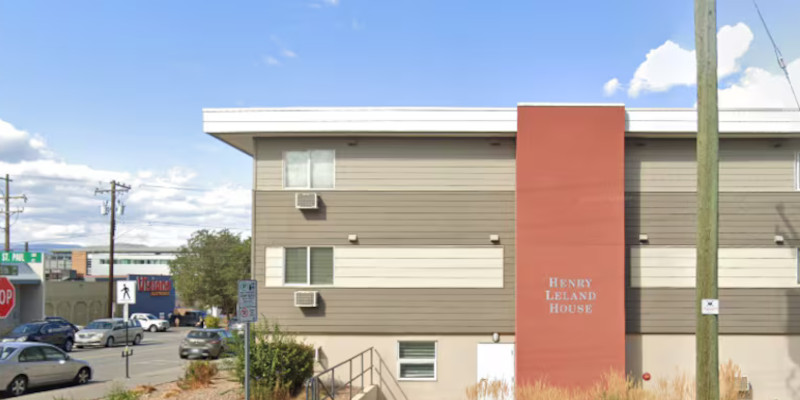
In 2009, a supportive housing building in Kamloops was named after Leland, two years after he died of exposure.
At the time of its opening, the province said Leland "was regarded by the community as a kind soul."The ASK Wellness Society, operator of Henry Leland House, told CTV News the building's sign was removed in light of the new allegation from U.S. law enforcement.
Executive officer of Ask Wellness Society Bob Hughes said Leland was well regarded in the city, and he died on the streets due to exposure. Naming the building after him was a call to action to ensure no one else would die because of homelessness, he added.
"You don't know everybody's secrets and you don't know what's behind the curtain here. In this case, it's something really terrible and tragic that happened at [Leland's] hand."